



sun-safety-facts.png

Sun Safety Explained
Being safe in the sun isn’t just a matter of keeping skin looking youthful – too much sun exposure can cause an array of skin conditions, including skin cancer in serious scenarios. Here’s how you can protect yourself in the sun, and help keep your skin looking radiant and youthful for longer:
Don’t skimp – slather!
Sunscreen is worth the investment, and it’s especially important to make sure that you are using enough. It’s recommended that you use around 30g of sunscreen for every application – that’s roughly the volume of a shot glass or a golf ball. Don’t be afraid to slather it on for full protection.
Use broad spectrum sunscreen
The sun’s rays are split into two categories – UVA rays cause premature skin ageing, while UVB rays cause sunburn. Both increase the risk of melanoma, which means it’s in your interests to protect yourself from both as much as possible. Broad spectrum sunscreen protects the skin from both types of harmful rays.
Stay indoors at peak time
You’ll often hear weather reporters informing us when the sun is at its peak – and its most dangerous. This is usually between the hours of 12pm – 2pm, though these hours can be extended as early as 10am and as late as 4pm. Stick to the shade and limit your sun exposure during these hours.
Be prepared
If you know you’re going out in the sun, apply your sunscreen and other skincare products fifteen minutes before stepping out, to ensure the skin has the chance to absorb them. Make sure to reapply every two hours, as well as after sweating, swimming or towelling.
Face up!
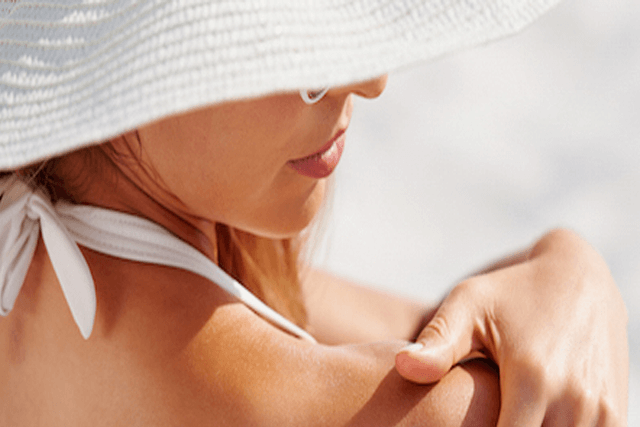
The skin on your face is often much more sensitive than the skin on your arms and legs, so don’t forget to invest in a face-specific sunscreen that will nourish your skin as well as protecting it. Don’t be afraid to make use of a wide-brimmed hat for double protection!
Choose UPF clothing
The best way to block out the sun’s rays isn’t just sunscreen – it’s covering up! Choose clothing with UPF (Ultraviolet Protection Factor) for your holidays, to ensure you don’t burn when you least expect it.
Stay hydrated
Sun exposure doesn’t just come with a risk of sunburn – it can also cause heat stroke, heat exhaustion and severe dehydration, if you’re not drinking enough. Keep a cold drink of water with you at all times, and sip it regularly to ensure you remain hydrated.
Banish the beds
Tanning beds emit large doses of harmful UV radiation, which can cause the skin to age much quickly than skin which hasn’t been exposed to these rays. If you’re looking for a deeper tan, try a gradual tan-building lotion which will develop your colour without harmful side-effects.
Don’t risk it in the shade
Indirect UVA rays can still damage the skin, even if you’re staying in the shade. Play it safe by wearing sunscreen, a hat and protective clothing while you’re out in sunny weather.
Recommended Stories
Sun Protection Tips for Healthy Skin

Sun Damage to Skin